
Home / Guides / Bulk tote bag packing: what to confirm before shipment
Bulk tote bag packing: what to confirm before shipment
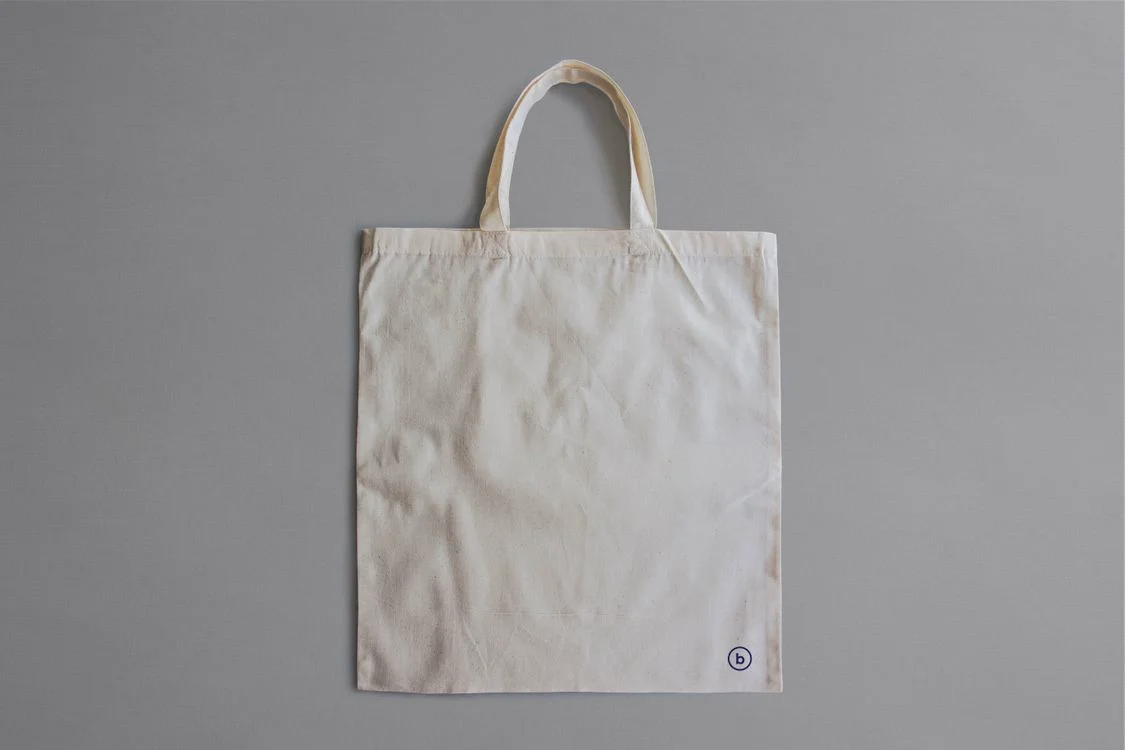
A bag sample can look right while the packing plan is still unclear. How many pieces go in each carton? Are colours separated? Does a retailer need barcode labels? Before a bulk tote bag order ships, put those answers in writing so the buyer, supplier and receiving warehouse are working from the same plan.
This checklist covers the packing and carton handoff, rather than the whole buying process. For the stages from first enquiry to dispatch, see our bulk tote bag order process guide. The checks below are questions to agree for your order, not a promise that every packing option is available or included in the bag price.
Agree how the bags will be packed
Start with where the bags are going next. Loose bags delivered to your own packing team may need a different arrangement from bags going straight to a retail warehouse or an event venue. Ask whether the proposed packing is bulk, bundled or individually wrapped, and whether the cost includes any labels, inserts or hangtags you need.
- Confirm the folded dimensions and the position of handles, gussets and any detachable parts. Ask to see a packed sample or photographs rather than guessing from a front-view product photo.
- Specify the quantity in each inner bundle and master carton. If an order has several colours or logo versions, write down whether cartons must contain one version only or an agreed mix.
- Send your warehouse receiving guide before packing is agreed. Include any carton weight limits, barcode format, pallet rules or appointment requirements that apply to that destination.
- Ask the supplier and forwarder how the goods will be protected from moisture, dust and staining on the planned route. Do not assume that an inner liner, protective wrapping or desiccant is standard or included.
Different bag constructions need different checks. A flat cotton tote and a structured jute bag may not fold or stack in the same way. Use the approved sample and actual packing trial to decide what is suitable; do not assume that every fabric bag can be compressed into the same carton.
Request carton data with units and a date
A bag size is not a shipping-carton size. Request the outside measurements of the packed carton, its weight and the quantity inside it. Make clear whether the figures are estimates for a quotation or final figures measured after packing. If packing changes, the freight estimate may need checking again.
| Field | What to confirm |
|---|---|
| Order reference | Purchase order, style or SKU, size, colour and artwork version |
| Quantity | Pieces per carton, number of full cartons and any partial carton |
| Dimensions | Outside length x width x height of each carton type, with units |
| Weight | Gross packed weight per carton; net goods weight if required |
| Contents | One SKU per carton or a documented mixed-carton breakdown |
| Marks | Carton number, order reference, contents and receiving labels as agreed |
| Status | Estimated or final, date measured and the version of the packing list |
Gross weight includes the goods and their packaging. Net weight refers to the goods without that packaging. Keep the two labelled rather than sending a single unexplained weight. Ask the forwarder which figures it needs and which measurement and rounding rules apply to the booked service.
Check volume as well as weight
Light fabric bags can still take up substantial space when packed. UPS explains dimensional weight as the space a package occupies compared with its actual weight. Carrier rules, divisors and service limits differ, so avoid applying a single online formula to every shipment.
For a simple volume check in cubic metres, multiply outside length x width x height in metres, then multiply by the number of cartons of that size. For example, a hypothetical 0.60 x 0.40 x 0.40 metre carton occupies 0.096 cubic metres; ten identical cartons occupy 0.96 cubic metres before any pallet allowance. This is a volume calculation only, not a freight quote or a statement of how many bags fit in a carton.
Ask the forwarder to confirm the final chargeable basis, any pallet or handling allowance, and the named collection and delivery points. Final cost cannot be calculated from bag quantity alone.
Make the packing list match the physical cartons
The International Trade Administration describes a packing list as an itemised record of each package, including weights, measurements and goods. For a bag order, make the list traceable to the actual cartons so a receiving team can find each style without opening every box.
- Start with the approved quantity split by style, size, colour and artwork.
- Match each carton number or number range to its contents and pieces per carton.
- Multiply full cartons by pieces per carton, then add any partial cartons. Check that the result matches the agreed order quantity.
- Show mixed cartons separately, including the quantity of each version inside them.
- Check the carton marks, packing list and other shipment documents for consistent references before handover. Ask your forwarder or importer which documents the shipment needs.
For example, 12 cartons containing 50 bags each account for 600 bags. If the order is for 620, the remaining 20 need an explicit partial-carton entry, not an unexplained difference. These numbers are illustrative; the correct carton quantity comes from your packing trial and agreed handling limits.
Approve labels and protection before the cartons are sealed
If you need retail labels, supply the final files and placement instructions early. Confirm who supplies or applies them, how they will be checked and whether they change the quotation. A label proof should identify the right SKU, colour and version; a barcode image alone does not prove that it scans or matches the receiving system.
For outer packaging, UPS recommends a rigid box within its weight limit and removal or concealment of old labels. The right carton construction and protection should be agreed for the actual load and route. Do not substitute a generic carton description for a packing check on your finished goods.
A packing brief you can send with your enquiry
- Bag specification: style, size, fabric, colour, logo version and quantity split.
- Packing: preferred fold, individual or bulk packing, inner-bundle quantity and any inserts or hangtags.
- Receiving: destination, warehouse guide, labels, carton limits and any pallet instructions.
- Shipment data: request estimated carton count, dimensions and weight for planning, then final measured figures before handover.
- Approval: ask what packing sample, photographs or document proof will be supplied, and when changes must be confirmed.
For a Priglob Exim enquiry, send the bag specification and your packing or receiving requirements through the contact page. Ask for available packing options, costs and final carton data to be confirmed in the quotation. If your design is not yet fixed, the sample approval checklist helps separate product approval from the packing decisions that still need agreement.