
Home / Guides / Jute vs burlap: the difference and which to order in bulk
Jute vs burlap: the difference and which to order in bulk
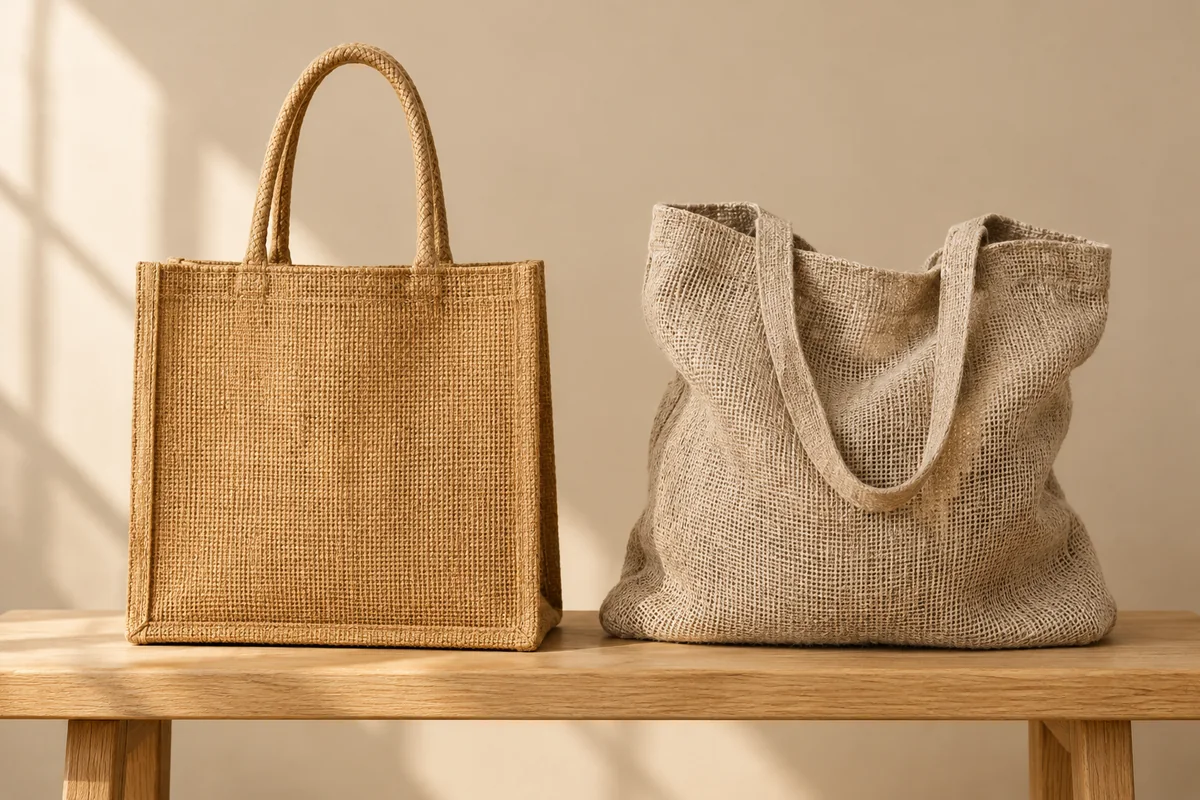
Type "jute vs burlap" into a search bar and you will find confident answers in both directions: they are the same thing, they are completely different. The truth sits in between, and getting it right matters when you are briefing a supplier for a few thousand bags. The wrong word on a spec sheet can land you a fabric that feels rougher, looks darker or prints worse than the sample you approved.
The short answer
Jute is a plant fibre, spun into yarn and woven into cloth. Burlap is a name for a coarse cloth woven from that yarn (occasionally from hemp or sisal instead). So most burlap is jute, but not every jute fabric is burlap. The tote bags you see in shops are usually woven from jute yarn in a finer, tighter construction than the open, scratchy cloth sold as burlap for sacks and garden use.
One more wrinkle: the words change with geography. Burlap is the everyday term in the United States and Canada. The same cloth is called hessian in Britain, Europe, Australia and New Zealand. If your supplier and your customers sit in different countries, agree on the fabric, not the word.
What the words mean where your customers are
| Term | Where it is used | What it usually refers to |
|---|---|---|
| Jute | Worldwide | The plant fibre itself, and finer woven fabrics made from it, including most shopping totes |
| Burlap | United States and Canada | Coarse, open-weave jute cloth: sacks, garden fabric, rustic décor and craft |
| Hessian | Britain, Europe, Australia, New Zealand | The same coarse jute cloth as burlap; also used loosely for any jute bag |
| Gunny | Older trade usage | Heavy jute sacking, as in gunny sacks for coffee, cocoa and potatoes |
How the fabrics differ in the hand
- Weave. Burlap and hessian are woven open and loose, so you can see through the gaps. Tote-grade jute fabric is woven tighter and calendered (pressed) flatter.
- Feel. Coarse burlap is scratchy and sheds fibres. Finer jute cloth is smoother against clothing and hands, which matters for a bag people carry daily.
- Look. Burlap reads rustic and rough. Fine jute reads natural but tidy, and takes a neater fold and a straighter seam.
- Print. An open burlap weave breaks up fine detail. A tighter jute weave holds bold one or two colour prints well; for photographic detail, cotton or canvas still wins, as our fabric comparison explains.
- Weight. Both come in a range of weights, measured in GSM. Lighter cloth drapes; heavier cloth stands. Our GSM and size guide covers how to choose.
Which one suits your order
| Your use | Better fit | Why |
|---|---|---|
| Retail and promotional totes | Finer woven jute | Smoother surface, cleaner print, comfortable to carry |
| Produce, market and farm bags | Burlap or hessian | Breathable open weave suits fruit, vegetables and bulbs |
| Rustic gift and hamper packaging | Burlap or hessian | The rough texture is the look customers want |
| Coffee, cocoa and commodity sacks | Heavy hessian or gunny | Woven for load and airflow, not for looks |
| Detailed multi-colour artwork | Cotton or canvas instead | A smooth, light surface carries fine print cleanly |
What to put on the spec sheet
- Name the fabric by construction: jute, and say whether you want a fine tote-grade weave or a coarse hessian weave.
- State the GSM range, so weight is not left to interpretation.
- Say how the bag will be printed, and approve a printed sample on the actual fabric before bulk.
- Note any finish: calendered, laminated inside for structure, or left natural and breathable.
- Confirm colour: natural golden, or a lighter washed tone for brighter print results.
Where blends like juco fit
Between pure jute and pure cotton sits juco, a woven blend of jute with a smaller share of cotton. The cotton content smooths the surface and softens the hand, while the jute keeps the natural look and most of the strength. Buyers tend to look at juco when they want the jute aesthetic but the artwork needs a finer, more forgiving weave, or when a pure cotton bag feels too ordinary and pure jute too rough. It sits in the same family as the fabrics compared in our fabric guide, and is worth sampling side by side with both.
Common mix-ups to avoid
- Ordering burlap when the picture in your head was a smooth retail tote. If the reference photo shows a neat shopper, ask for tote-grade jute, not sacking.
- Assuming hessian is a different fibre from burlap. It is the same cloth under a regional name, so a UK customer and a US customer may be asking for identical fabric.
- Judging the fabric from a two-inch swatch. Weave, handle and shedding show properly only on a made-up sample bag.
- Leaving the word off the artwork proof. If the bag itself is printed with care or content wording, make sure the fabric named on it matches what is actually ordered.
Care differs too. Fine jute totes handle gentle spot cleaning; coarse burlap sheds and snags if it is scrubbed or machine washed. Our jute bag care guide covers what to put on the care label. When you are ready to compare options, browse the jute tote range and the burlap bag range, then request a quote below. Tell us the market, the artwork and the feel you want, and we will recommend the weave and weight before you commit to bulk.