
Home / Guides / How to clean jute bags: a care guide for jute, cotton and burlap totes
How to clean jute bags: a care guide for jute, cotton and burlap totes
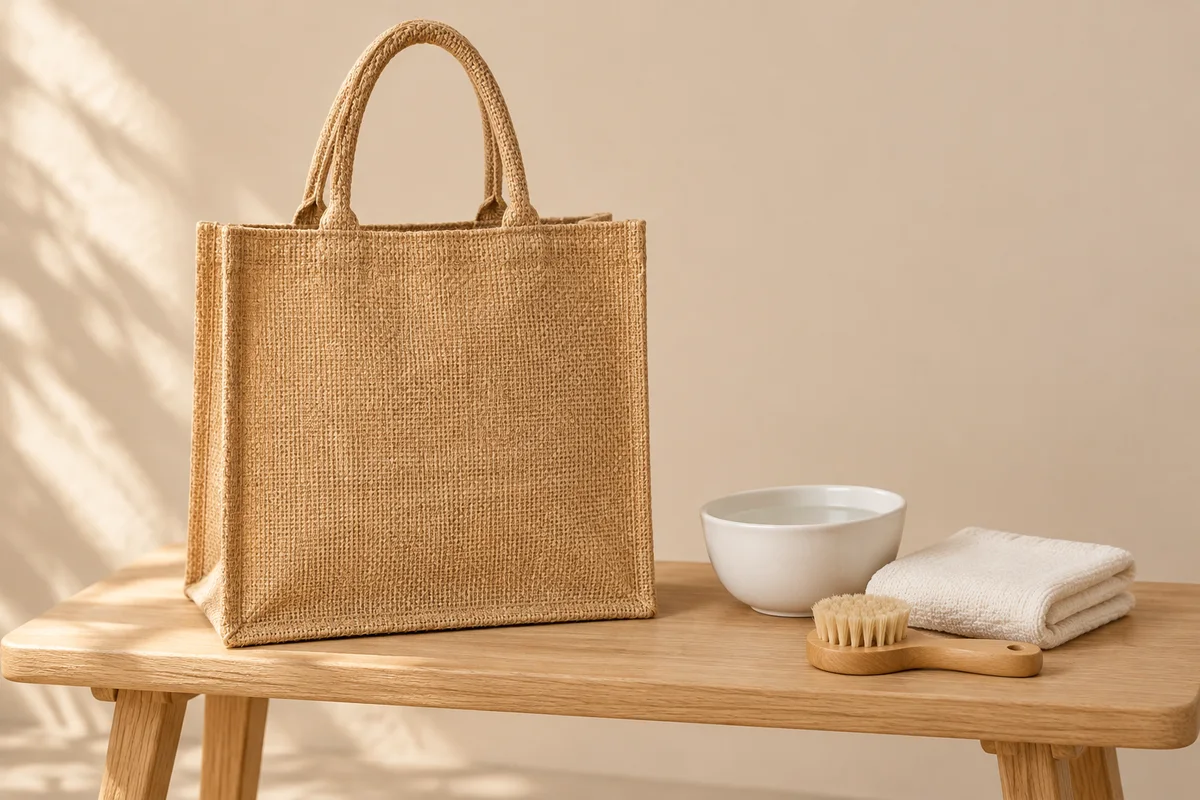
A jute tote that survives years of weekly use is a quiet advert for the brand printed on it. The same bag shrunk, warped or mildewed after one wash says the opposite. Most damage to natural-fibre bags happens in the first few washes, and almost all of it is preventable with the right care routine.
This guide explains how to clean jute bags without shrinking or distorting them, and how the same rules adjust for cotton, canvas and burlap styles. It is written for bulk buyers: use it to brief your own customers, to judge supplier care advice, and to decide what belongs on the care label when you order. For fabric background, see our jute, cotton and canvas comparison.
Know the fabric before any water touches it
Jute is a bast fibre: strong in tension, but it swells and weakens when soaked, and it dries slowly. Cotton and canvas tolerate water better, though they still shrink with heat. Burlap is jute in a looser weave, so it frays and loses shape even faster. Laminated or lined bags add another rule: water can creep between the fabric and the film, so the inside of a laminated bag should be wiped, never soaked.
| Bag type | What water does | Safest cleaning route |
|---|---|---|
| Plain jute tote | Fibres swell, weave can distort, slow to dry | Spot clean; occasional gentle hand wash |
| Laminated jute | Moisture can lift or cloud the inner film | Wipe inside and out; no soaking |
| Cotton or canvas tote | Shrinks with heat, colours may bleed | Hand wash cool; short machine cycle only if the supplier confirms |
| Burlap shopper | Open weave frays and sags when wet | Spot clean only, reshape while damp |
How to clean a jute bag step by step
- Empty the bag fully and shake out crumbs and dust, inside and out.
- Spot clean marks first: dab with a cloth dipped in cool water with a drop of mild liquid detergent. Work from the outside of the stain inwards and never scrub.
- If the whole bag needs washing, hand wash in cool water below 30°C with a small amount of gentle detergent. Keep soaking to a few minutes.
- Rinse in cool water until the suds are gone. Press water out between your palms; never wring or twist the bag.
- Reshape the bag and lay it flat or stand it on a clean towel to air dry, away from direct sunlight and radiators. Never tumble dry.
Machine washing is the most common way a jute bag dies young. The agitation pills the surface fibres, the spin cycle twists seams and handles out of line, and corners lose their shape for good. Unless the supplier has explicitly confirmed a style as machine washable, keep jute away from the machine.
Stains, smells and mildew
- Grease marks: cover with bicarbonate of soda or cornflour, leave for a few hours, brush off, then spot clean.
- Musty smells: air the bag outdoors in shade for a day; a dry sprinkle of bicarbonate of soda inside overnight helps.
- Mildew spots: brush off dry spores outside, dab with a cloth barely dampened with diluted white vinegar, then dry thoroughly.
- Never use bleach or harsh stain removers: they strip the natural colour and weaken the fibres.
Drying and storage between uses
Slow, shaded air drying keeps the weave stable. Direct sun fades both the fibre and most prints, and high heat sets shrinkage. Once fully dry, store bags flat or loosely folded in a dry room. A bag stored damp, or sealed in plastic before it is fully dry, is the usual cause of mildew complaints weeks later.
Caring for printed and embroidered bags
Decoration changes the rules. Printed designs last longest when the bag is washed inside out, cool and gently, and never ironed on the print side; heat is what cracks and fades most prints. Embroidery tolerates washing better but snags on rough handling, so keep embroidered bags away from velcro and abrasive surfaces in the wash pile. Whichever method your bags carry, the sample stage is the time to test a wash cycle and confirm the decoration survives it, as covered in our printing methods guide.
Why care instructions belong in a bulk order
For a wholesale buyer, care is part of the product. Retail and gifting customers blame the bag, not the wash, when a tote shrinks or a print cracks. A short, accurate care label or swing-tag line cuts complaints and returns, and it keeps your branding in circulation longer. Care expectations can also shape the order itself: if end customers will wash the bags often, a washable cotton style or a pre-shrunk fabric may suit better than raw jute.
| Care point | What to specify when ordering |
|---|---|
| Care label | Ask for washing and drying symbols plus a plain-English line sewn or printed inside |
| Fabric choice | Pre-shrunk cotton or canvas where frequent washing is expected |
| Print method | A method suited to washing, agreed with the supplier before bulk |
| Lining or lamination | Wipe-clean inner for food, lunch or market use |
If you are still comparing fabrics, our GSM and size guide explains how weight and weave change how a bag wears. When you are ready to plan an order, browse the jute range or the cotton range and request a quote below; tell us how the bags will be used and cleaned, and the care label can be agreed with your sample before bulk production.