Home / Guides / Tote bag printing methods for bulk orders: how to choose
Tote bag printing methods for bulk orders: how to choose
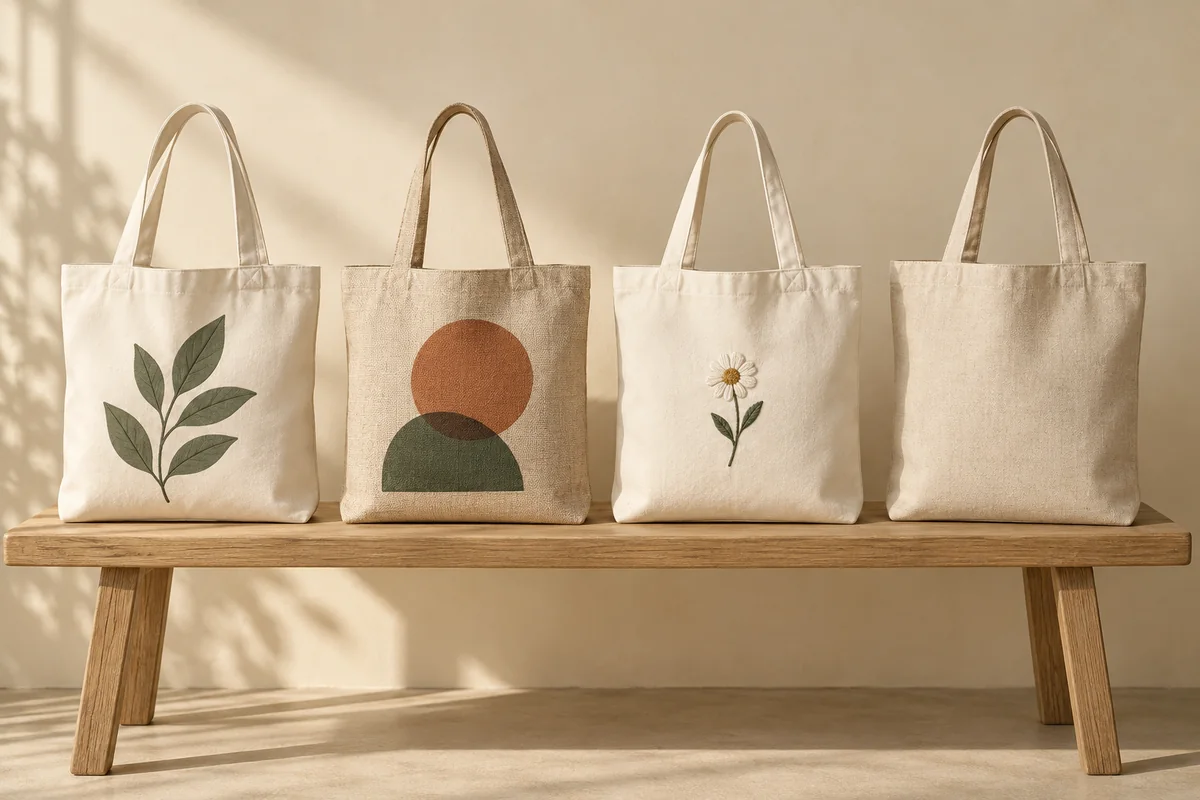
The decoration method decides how your bag looks on day one and how it looks after a year of use. Buyers often choose on the mock-up alone, then discover the print cracks, fades or fills in after the first wash. This guide covers the three methods we run most on bulk tote orders - screen printing, heat transfer and embroidery - and how to match each one to your fabric and artwork.
The short version
- Screen printing pushes ink through a mesh stencil onto the fabric. Bold, flat colour that lasts. The default for one to three colour logos at volume.
- Heat transfer presses a printed film onto the bag. Handles fine detail, gradients and many colours, and suits smaller runs or complex artwork.
- Embroidery stitches the design in thread. A raised, premium finish that outlasts the bag itself. Best on firm, heavier fabrics.
Screen printing: the bulk workhorse
Each colour in the design gets its own screen, and the ink is pressed through onto the fabric one colour at a time. The result sits slightly on top of the weave, with solid, even colour that survives washing and daily use far better than most alternatives. That is why screen printing is the standard for logo totes ordered in the hundreds or thousands.
The limits are colour count and detail. Every colour adds a screen and a pass, so simple artwork keeps quality high and consistency tight across a long run. Very fine lines and photographic gradients are not what screen printing does well - keep shapes bold and text above a sensible size, especially on textured fabrics like jute, where a coarse weave swallows thin strokes.
Heat transfer: detail and full colour
Heat transfer prints your artwork onto a film first, then presses it onto the bag with heat. Because the artwork is printed rather than stencilled, it can carry gradients, small text and many colours in one pass. For a detailed illustration, a full-colour design or a shorter run, transfer is usually the practical route.
The trade-off is feel and wear. A transfer sits on the surface as a thin layer, so large solid areas can feel less fabric-like than a screen print, and heavy flexing over years can age the film. Kept to a sensible size on the bag, it holds up well for everyday retail and event use.
Embroidery: stitched and built to last
Embroidery sews the design directly into the fabric with coloured thread. Nothing sits on the surface, so there is no ink to crack and no film to peel - the decoration typically outlasts the bag. It reads as premium in a way print rarely does, which is why it suits retail merchandise, staff bags and gifts. Our embroidered tote bags show the range of hand and machine work possible.
Embroidery needs a firm base. Dense canvas and heavier cotton hold stitches cleanly; very light fabrics pucker. Fine detail and small text are harder in thread than in ink, so simplify the artwork and let the texture do the work.
Match the method to the fabric
| Fabric | Best methods | Watch out for |
|---|---|---|
| Cotton tote | Screen print, heat transfer, embroidery | Light cotton puckers under dense embroidery |
| Canvas tote | All three | Textured weave softens the finest print detail |
| Jute tote | Screen print (bold designs) | Coarse weave fills in thin lines and small text |
| Burlap and hessian | Screen print (very bold only) | Open weave - keep shapes large and simple |
If you have not settled on fabric yet, our guides to jute vs cotton vs canvas and GSM and sizes cover that side of the decision.
Artwork that prints well at scale
- Supply vector files (PDF or AI) wherever you can. A vector scales cleanly to any bag size; a screenshot does not.
- Limit colours on textured fabric. One to three spot colours print crisply on jute and burlap; smooth cotton and canvas can take more.
- Keep text large. On a coarse weave, small lettering fills in. If the message matters, give it room.
- Mind the placement. A centred chest print survives folding and packing better than a design that runs over seams or gussets.
- Consider a woven label for a subtle, repeatable brand mark - it works on any fabric and suits minimalist branding. See the custom tote bags page for label and print options together.
Approve a sample before the bulk run
However good the mock-up looks, ink on fabric is a physical thing. Ask for a pre-production sample with your actual artwork on your actual fabric, and check it in daylight: colour, placement, edge sharpness and how the print feels in hand. Approving a real sample is the single cheapest insurance on a bulk order - changes after production starts are the expensive kind.
Ready to brief a run? Request a bulk quote with your quantity, fabric and artwork, or browse the custom logo range to see sizes and styles first.
Related bags
- Custom tote bags
- Custom cotton tote bags
- Custom canvas tote bags
- Embroidered tote bags
- Custom logo drawstring bags