Home / Guides / Tote bag stitching and seams: what to specify before bulk
Tote bag stitching and seams: what to specify before bulk
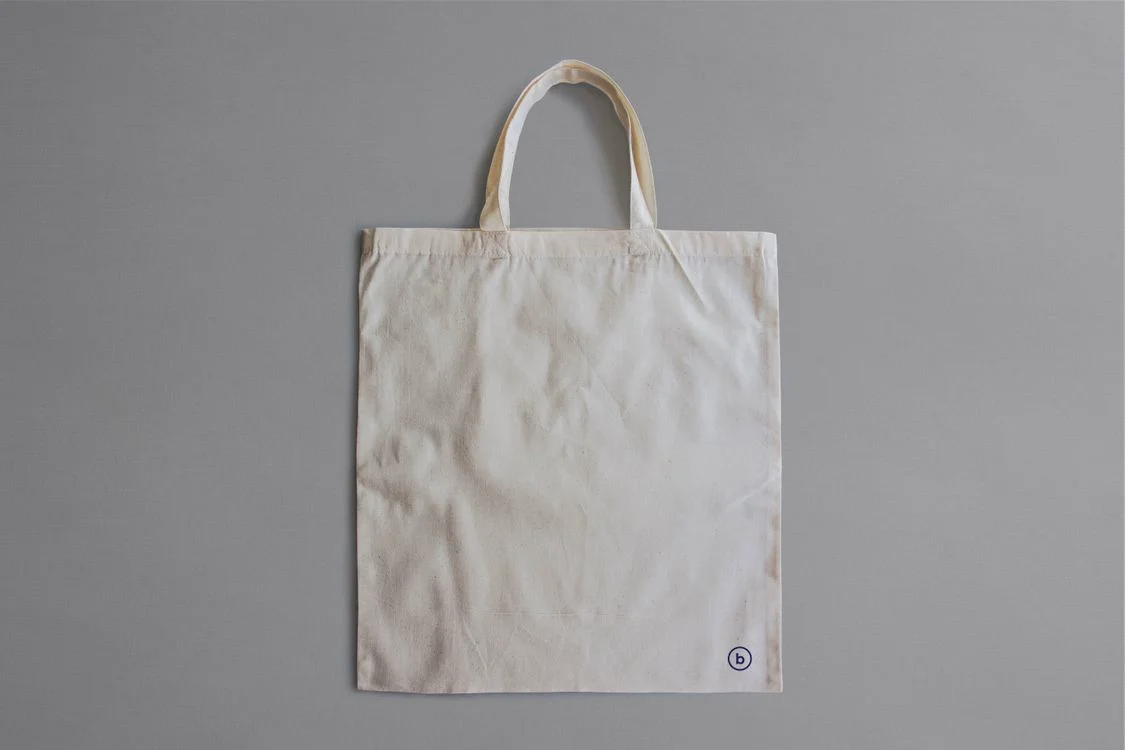
Two tote bags can use the same fabric weight and still be made differently. One may have exposed internal edges, another a bound finish; their handles may enter the top hem or be sewn onto the outside panel. A request for strong stitching does not tell a supplier which construction you expect.
For a bulk order, turn that phrase into a short seam brief: identify the joins, describe the finish and record how the handles attach. This guide explains the vocabulary and the questions to ask when discussing custom tote bags. Construction choices, materials, reinforcement and any performance testing must be confirmed for the quoted style, not assumed from these examples.
Separate the stitch from the complete seam
A stitch describes how thread is formed. A seam is the joint between the pieces of material. The visible line is only part of that joint: the fabric overlap, folded edges, thread and layers underneath also belong to the construction. Changing one of these details can change what is being approved even when the outside looks similar.
Coats' seam reference distinguishes seam constructions from the stitches used to sew them. Buyers do not need to select every machine setting. Ask the supplier to identify the proposed join and show it on an opened sample or section drawing, rather than relying on a phrase such as double stitched.
| Term in a quotation | What it describes | What to clarify |
|---|---|---|
| Lockstitch | A thread formation used for sewing | Which join it is used on and which layers it catches |
| Two rows of stitching | Parallel visible stitch lines | Row spacing, position and purpose |
| Overlocked edge | Thread covering a cut fabric edge | Whether there is a separate joining seam |
| Bound seam | A strip covering the seam edge | Binding material, coverage and finish at corners |
| Box-X or bar tack | A local attachment or reinforcement pattern | Dimensions, position and supporting layers |
Make the inside finish part of the brief
Ask to see the side seams, base and corners from inside the empty bag. A photograph of the printed front cannot show these areas. Mark the joins you want the supplier to explain, especially where several layers meet or where a handle attachment is hidden by a top fold.
An overlocked edge, a bound edge and an enclosed edge are different ways of finishing construction. Do not rank them by name alone. Check whether the finish is suitable for the intended contents and whether it matches the agreed sample. Binding that misses an edge or a bulky corner that catches the contents needs discussion even if the rest of the bag looks tidy.
Keep the structural join separate from edge neatening. Coats' basic stitch guide describes several overedge formations with different uses. The word overlock by itself does not explain the entire seam. For the broader interior decision, our lined versus unlined tote guide covers what each interior exposes or conceals.
Describe handle attachment beyond the visible X
A box-X is a rectangular stitch pattern with diagonals. A bar tack is a compact area of dense stitching. Either name leaves questions unanswered: how far does the handle overlap the body, what sits beneath it, and where does the stitch pattern finish relative to the fabric edge? Ask for front and reverse photographs of the proposed attachment.
The pattern is not a carrying-capacity certificate. The body material, handle, overlap, supporting layers and sewing all need to work together. More stitching is not an automatic improvement: a dense pattern can put many needle holes into a small area. Ask the supplier to propose and validate an attachment for the actual material combination rather than copying a pattern from another bag.
Keep handle dimensions in a separate part of the drawing. Our handle length and drop guide explains the fit measurements; the seam brief should show how that handle joins this particular bag. If a backing patch or another reinforcement is proposed, record its position and material too. Do not add a kilogram claim from a photograph or fabric GSM.
Avoid universal stitch-count rules
Stitch density describes the number of stitches over a stated length. A quotation that gives a count without a unit or measurement location is hard to check. Ask which seam is being measured, over what length and what range is proposed for the selected material. Do not transfer a number from a thick webbing attachment to a light fabric panel.
Thread colour is also not a complete thread specification. If construction consistency matters to the order, ask the supplier to record the thread reference and any agreed substitution controls. The supplier should select a compatible thread, needle and sewing process. Your approval should focus on the documented construction and its result, not an invented one-size-fits-all machine setting.
Review both appearance and intended use
Start with a visual inspection under good light. Look at both faces of the seam, including starts, ends and corners. Record skipped stitches, loose loops, gaps, puckering, damaged cloth or an edge that has escaped the binding. Photograph the location with a wider view as well as a close-up so the supplier can identify it.
Then review the complete sample with the intended contents, following an agreed procedure. A neat seam does not establish how the bag performs under repeated use. If carrying capacity is important, agree the load, method, duration or cycles, and acceptance criteria with the supplier or test provider before making a claim. Do not use an improvised overload demonstration as a substitute for a defined test.
- Identify each important seam or attachment on labelled front, back and interior views.
- Compare the sample with the agreed material, seam finish and reinforcement details.
- Check the base, corners and handle joins rather than only the easiest straight seam.
- Keep appearance observations separate from measured or tested performance.
- Record changes in the specification and obtain confirmation before treating a revised sample as approved.
Send a seam brief that can be quoted
For example, a request for a retail tote could identify the side and base joins, ask for photographs of the proposed interior edge finish, and show the handle attachment on both faces. Add the intended contents and ask the supplier to confirm the construction and any relevant sample tests. This gives a clearer basis for comparison than asking several suppliers for their strongest tote.
Include quantity, bag dimensions, fabric reference, artwork position, destination and required date with that brief. Ask whether any construction change affects the quotation or sample schedule; do not assume reinforcement or a different finish is included at the same price. Keep the final seam details with the approved bag revision. Our sample approval checklist helps bring construction, measurements and decoration into one record.
Send the starting style and your labelled construction questions with a quote request. The useful outcome is not the most impressive stitch name. It is an agreed, inspectable bag construction, supported by the sample and any performance evidence the order needs.